Mass Killing as a Means of Climate Intervention
Panic RoomMass Killing as a Means of Climate Intervention is the name for the radical, concealed strategy at the heart of Jack Harkness’s plan: use a remotely triggered nanobot network to cause deaths on a vast scale and thereby reduce humanity’s pressure on the climate and other species. Filippo Crosetti explains how the scheme was meant to work, and why its architects saw it as both a response to ecological catastrophe and an atrocity. The plan’s eventual failure prevents its intended mass deaths, but leaves the underlying climate crisis—and the question of who may be made to bear its costs—unresolved.
Climate Emergency and the Plan’s Rationale
Filippo sets out the climate argument that persuaded him to join Jack and Jane Glasson. To hold global temperature rise to two degrees above pre-industrial levels, carbon emissions would have to fall to half their current level by 2050 and continue declining to zero. In his account, the remaining carbon budget is fewer than 300 gigatons: more than 500 gigatons have already been emitted against a limit of 800. At an annual rate of ten gigatons, the remaining allowance would be exhausted in less than thirty years. Without a sharp change, he warns, climate change could bring unprecedented floods, storms, droughts, and famine.
The argument extends beyond the human consequences of warming. Filippo says at least 20 percent of species could be extinct or near extinction by 2050, making the unfolding loss a sixth mass extinction, and the first in his account caused by humanity. These figures give the plan its terrible internal logic: the population reduction is treated as a way to reduce the human threat to other people and species. Filippo describes the choice as one between catastrophes, not as a clean solution. His reasoning makes the plan intelligible to its makers, but does not establish that the people exposed to it consented, caused the crisis, or should be made to pay for it.
Design and Reach of the Nanobot System
Jack’s response was to enter pharmaceuticals and build a delivery network into ordinary products. Filippo says that people who had used Harkness Pharmaceuticals drugs or cosmetics over the preceding five years could carry nanobots, as could people exposed through food grown with the company’s pesticides or meat from animals treated with its antibiotics. Beauty products, pain relief, anti-malarials, Elixtris, and Fenextris are among the examples he lists. The nanobots would eventually leave a person’s system, but ongoing production and replacement would keep the network replenished. The intended reach was therefore broad and largely invisible: exposure came through commonplace products rather than an openly announced intervention.
The activation method was called Cascade. Doctor Tau had developed a way to control nanobots from outside the host and initiate a chain reaction: one triggered device would activate others within ultrasonic range. Filippo says the system at Wortalleth West could start the process, while additional overrides there and in Locarno were known only to him and Harkness. Once started, Cascade could not be stopped through ordinary control. This technical arrangement linked the hidden room, its power infrastructure, and a distributed population carrying nanobots; the danger depended not on one device alone, but on the connection between a local trigger and a much wider network.
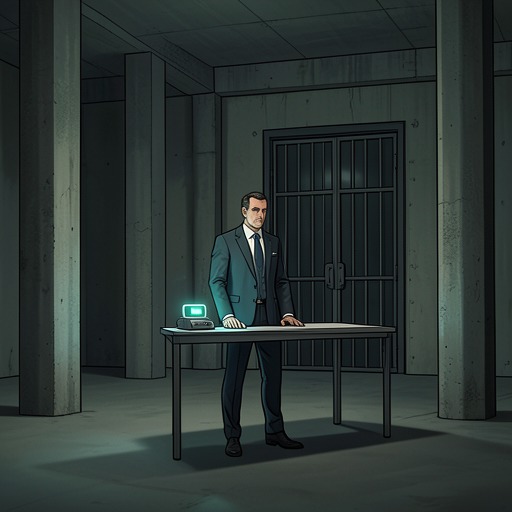
The trigger was tied to the panic room’s breach. Harkness’s design made the room’s opening the event that would start Cascade, so that those who broke in would unknowingly activate the process. The room itself was associated with unusually extensive independent power: Harkness had arranged a solar array, photovoltaic film, and a large flow-battery system, a supply Don Challenor judged excessive for the property. The apparent security of a concealed, self-sufficient room thus served a second purpose in Filippo’s explanation: supporting the mechanism that could initiate the wider catastrophe.
Intended Effect and Ethical Contradiction
Filippo says the nanobots were not meant merely to treat illness or deliver a pharmaceutical benefit. Their components had been redesigned to discharge an electrical signal that interfered with the host’s bioelectronic system. The intended result was fatal. When asked how many people might die, he cannot offer a count; he says only that the number would exceed anyone’s ability to count and would be sufficient, in the conspirators’ calculation, to keep warming below two degrees.
That proposed exchange is the plan’s central ethical rupture. Its beneficiaries, if it worked as intended, would include future populations and nonhuman species protected from some consequences of unchecked warming. Its immediate victims, however, would be people exposed through products they had used, not participants who had knowingly accepted the risk. Filippo’s explanation identifies no mechanism by which those people could consent or refuse. The plan converts an argument about shared responsibility for environmental damage into a technology that imposes the cost on a vast, unconsulted public. The disproportion between decision-makers and those endangered is part of what makes the scheme more than an extreme climate policy: it is mass killing presented as environmental intervention.
Doubt, Failure, and the Continuing Countdown
Filippo had joined Jack and Jane twelve years earlier because he believed their intended outcome was right. By the time he explains the plan, he says he has lost confidence in carrying it through. He had hoped that a rapid switch to renewable energy might meet the climate need without mass death, but he believes Jack and Jane will not wait. His admission that the plan seems both madness and sanity records the pressure of its false binary: either accept the deliberate catastrophe or imagine a worse one later. That framing shows how urgency has narrowed the conspirators’ choices, but it does not erase their responsibility for choosing violence against people who did not choose the scheme.
The plan is ultimately prevented from working, even if the panic room is opened. Don’s closing reflection describes the catastrophe as something that could have begun that day, in Switzerland and elsewhere, but did not. He is relieved, though not entirely certain of his relief: Jack’s failure averts the immediate threat, while the emissions problem and the projected losses of species remain. The clean Swiss air and the image of clocks make the ending’s contrast concrete. The countdown has not stopped; only this attempt to answer it through mass killing has been thwarted. The concept therefore remains deliberately unresolved in moral as well as environmental terms: the novel rejects the plan’s means without diminishing the danger its architects invoked.